Who’s going to drive tomorrow’s trains?
A train is whooshing across the tracks at 200 km/h (124 mph) and a few hundred meters later a broken-down vehicle at a railroad crossing is blocking the track. For a train driver, that means recognizing, assessing, and reacting – within fractions of a second. An automated train needs to master the same situation, except that sensors and software make the decisions instead of humans.
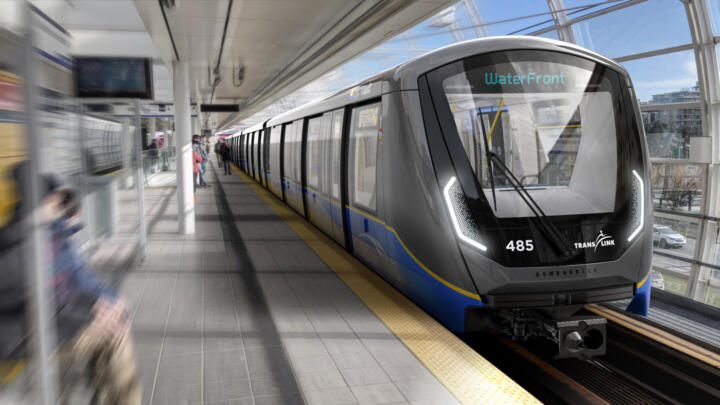
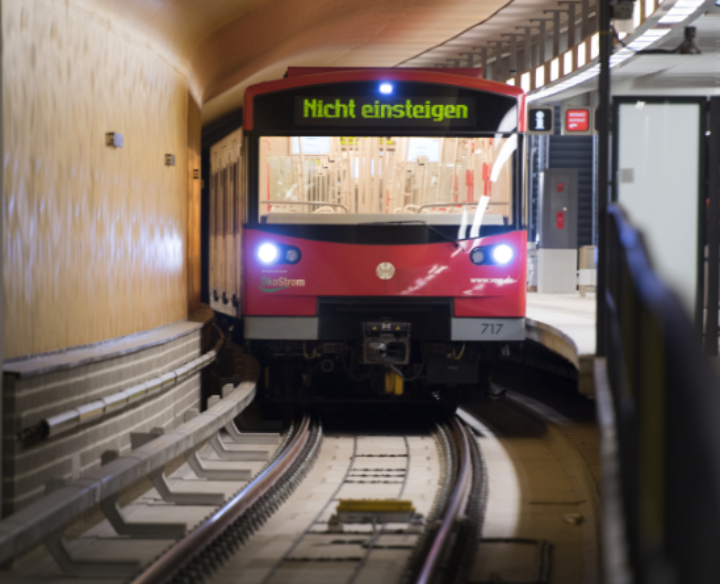
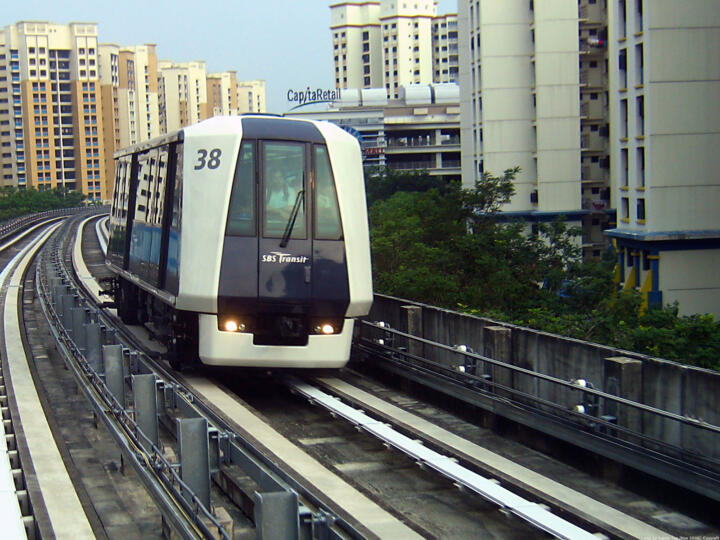
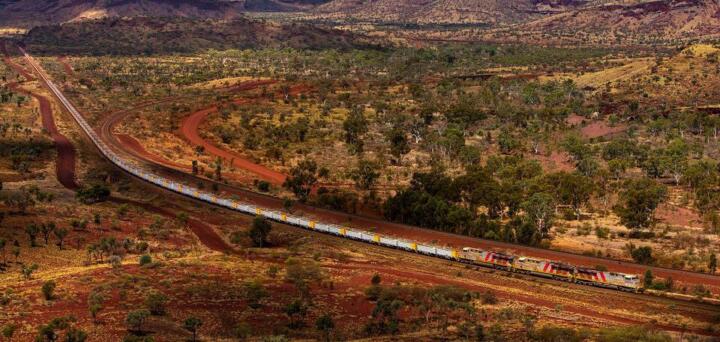
Trains without drivers are not a new development. As early as in 1983, a fully automated subway went into regular service in the Northern French city of Lille – mind you, more than four decades ago. In cities like Dubai, Paris, Singapore, Copenhagen, or Nuremberg inner-city trains travel in fully automatic mode as well. In Australia, a freight train without human drivers hauls thousands of tons of iron ore from A to B. However, all these examples have the same principle in common: They operate in closed systems and not in the regular, freely accessible, and highly complex railroad network where different types of trains meet and where the environment can never be controlled completely.
“A highly or fully automated train must be able to independently and reliably capture its environment and react safely – for instance to a person on the track, a fallen tree, or to a vehicle that has broken down at a railroad crossing,” says Professor Gert Bikker, PhD, Director of the Institute of Rail Systems Technology at the Institute for Transportation Systems Technology of the German Aerospace Center (DLR). That’s why for Bikker automated driving is less of a question pertaining to individual trains but of the system as a whole. The vehicle, infrastructure, operation, and humans must interact. The technology for that has already made amazing progress in many areas.
This is where trains already run autonomously
What are the greatest technological challenges?
Accelerating, braking, maintaining consistent speed, or stopping with pinpoint accuracy – automatic train systems have long mastered those skills. Driverless subway trains recognize their surroundings and react to obstacles as well but typically run on tracks whose access points and processes are relatively easy to control. In the open railroad system, the task is clearly more complex because here thousands of often unpredictable scenarios may occur.
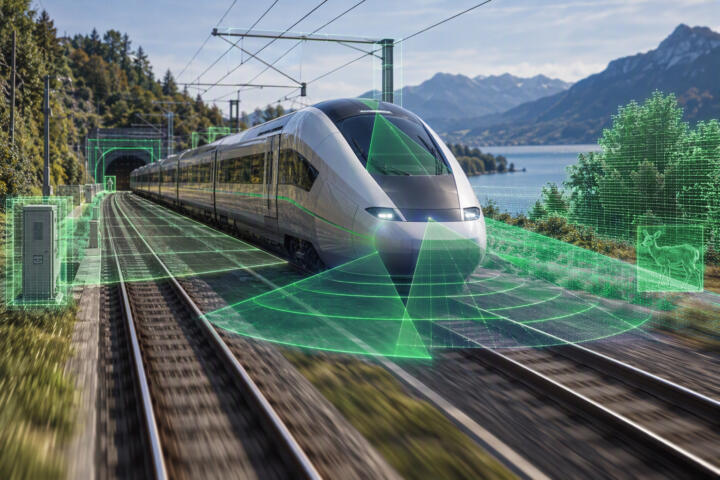
That’s why an autonomous train not only needs to recognize what’s in front of it. It must identify potential hazards as early as possible, assess their significance, and derive the right reactions from that. To enable it to do so, cameras and other sensors must acquire the route and its surroundings with even greater continuity and detail than in the closed systems – with the weather, rain, snow, fog and traveling against the light playing a role as well. The systems, for instance, must be able to distinguish a person on the edge of the platform from an individual that’s actually moving into the danger zone. The crucial factor in that regard is that instead of reacting only when an obstacle appears directly in front of the train the systems recognize if a situation might become critical early enough because in the case of a heavy train traveling at high speed the braking distance can amount to as much as several hundred meters.
ATO drives – RTO intervenes
In discussions in the professional world, there are two abbreviations mentioned particularly often: ATO and RTO. ATO stands for “automatic train operation” where the technology takes over a driver’s tasks step by step. That can range from automatic starting and braking to totally driverless operation, depending on the grades of automation.
Grades of automation – what does that mean?
Whether automobiles or trains: Autonomy doesn’t happen in one go. In automobiles, the levels range from 1 to 5, in trains from GoA 1 to GoA 4 – from assisted to fully automated driving, respectively.
GoA 1 – Manual operation with protection: The train is driven by the driver, assisted by systems during startup and braking.
GoA 2 – semi-automatic operation: The system takes care of starting up and braking while an operator remains in the cabin monitoring the operation.
GoA 3 – Driverless operation: The train runs automatically without a driver in the cabin but personnel remaining on board able to intervene in the event of trouble or emergencies.
GoA 4 – Fully automated operation: The train runs totally autonomously and without personnel on board, including startup, cruising, braking, and door operation.
RTO pursues a different path. Remote train operation means that no human operator needs to sit in the train but monitors or remote-controls its operation from a control center, depending on the system. That can become particularly interesting when an automated train is confronted with a situation that its systems cannot reliably master. In that case, the combination of ATO and RTO can turn into the decisive principle: The technology takes over normal operation while the human operator remains in the system as a fallback level. The main prerequisite for that are powerful computers and stable broadband communications connections between the train and control center. In addition, RTO is attractive for other use cases such as switching in depots and staging of empty trains.
What’s the DLR’s contribution to automated train operation?
A look at Northern Germany shows that at DLR automated driving not only exists on paper. In a research project called ARTE – “Automated Regional Trains in Lower Saxony”– DLR and train manufacturer Alstom (Schaeffler also has a strategic partnership with Alstom) have upgraded a regional train for automated operation. The special feature of the project is that the technology should be able to cope with the existing infrastructure. Instead of completely converting the tracks for the trial cameras and sensors had to learn to cope with the things a human train driver faces. The project ran from 2022 to the end of 2024. In test runs DLR and Alstom proved that optical signals can automatically be recognized reliably and securely.
What sounds like a manageable technical detail is a central factor for autonomous operation: A train not only needs to know where it is and how fast it’s running. It needs to understand its environment and that’s precisely the point at which automated train control becomes automated driving.
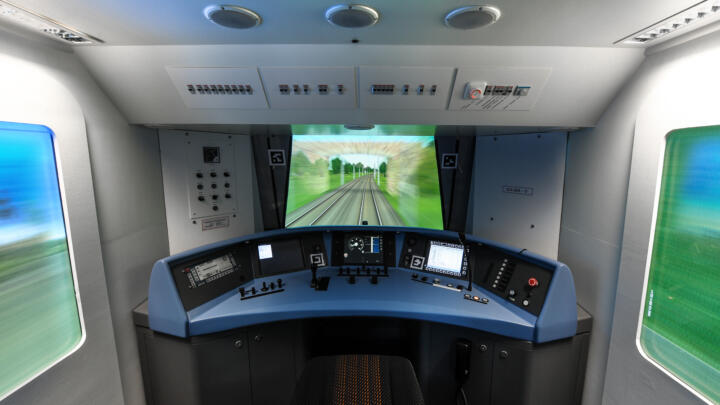
A look at the DLR’s RailSiTe laboratory in Braunschweig shows how difficult that task is. RailSiTe stands for Rail Simulation and Testing and represents large parts of the railroad system under laboratory conditions – from the signal tower and route infrastructure to the interface between the track and the train. It makes it possible to test safety-critical systems and scenarios that can be reproduced in normal rail operations only with a major effort or not at all.
Gert Bikker, the institute’s director says that “especially in the case of so-called perception systems, in other words the technical environment acquisition, artificial intelligence plays an increasingly important role but that makes the proof of safety a challenge. With a classic technical component, its behavior can be described and checked with comparative accuracy. That’s more difficult in the case of complex and AI-based systems. We cannot individually test every situation that might occur on the route of a railroad in real-world operation. That’s why at DLR we investigate new testing methods. Scenario-based testing is one of those approaches. It describes typical and particularly critical traffic situations, varies them, and initially investigates them in simulations. That enables considerably more comprehensive testing of whether a system reliably performs even under difficult conditions, which is a key prerequisite for subsequent approval.”
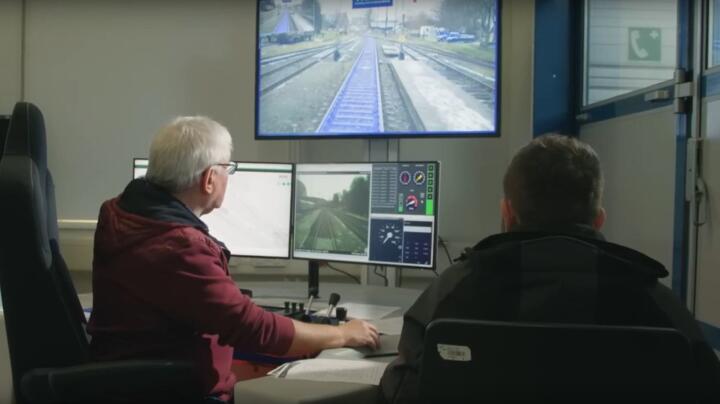
Yet DLR looks beyond the onboard technology on trains. With increasing automation, the role of human personnel changes as well. How many trains can an operator monitor at the same time? What information is needed for that purpose? And how does the operator’s workstation need to be designed for them to react quickly? A remote operation center is currently being created for that purpose in Braunschweig to investigate how automated and remote railroad operations can be reliably connected in the future.

“The current challenge is to create a total system that will reliably function and be suitable for approval under real-world conditions.”
At the same time, automation opens up new potential for railroad operations. It can help curb the growing shortage of train drivers and enable more flexible utilization of trains as needed. Especially on secondary lines, smaller, automated vehicles could make economical operation possible even where current conventional offers reach staffing or economic limits. DLR is investigating exactly those kinds of novel rail vehicles and flexible mobility solutions.
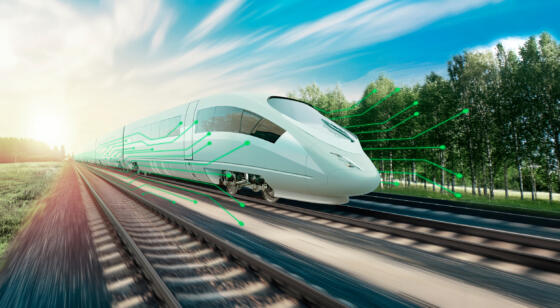
What still needs to happen for large-scale automated operation to get off the ground?
“The crucial aspect now is to merge technology, operation, and regulation,” says DLR expert Bikker. “Higher automation levels call for clear requirements – such as what capabilities a system needs to have for environmental recognition and how its safety can be proven. That requires testing scenarios, standardized testing procedures, and clear approval processes.
That shows that policy makers, authorities, research institutes, infrastructural operators, and industry must jointly clarify how fully automated operation can be integrated into the existing railroad system. “Generally, all that is not only a technological question,” says Bikker.