A little more precision please
Standard weights | around 2800–1800 BC
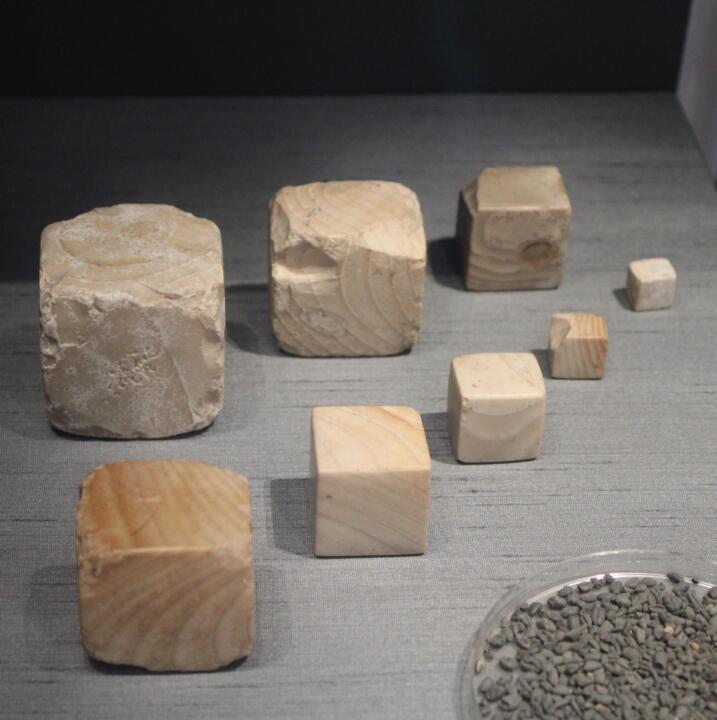
A pound of flour, please! Today, that’s easy to say. A significant piece of relevant knowledge is the fact that even as early as in the Indus Valley Civilization during the Bronze Age, one of the earliest advanced civilizations in the world, people would use standardized weights. Archeologists found carefully finished stone cubes in today’s Pakistan and North West India. The smaller weights were in line with a fixed system: each increment was twice as heavy as the previous one and the higher weights had additional decimal gradations.
Reason for relevance? Standard weights made goods comparable enabling reliable and precise weighing as well as fair trade.
Ell | around 2000 BC
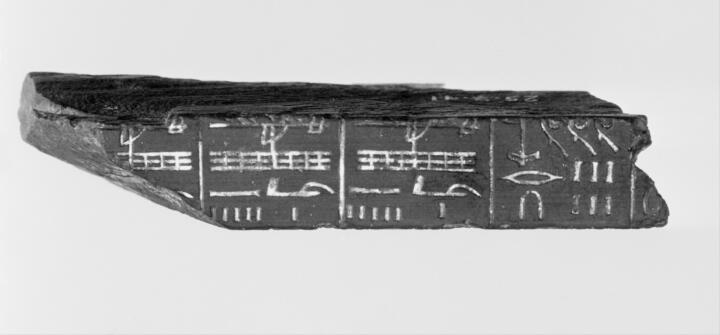
A foot, hand, or forearm: The first linear measures were oriented to the human body, and the ell is deemed to be one of the oldest natural measurements. That entails a bit of a problem, though, because not every forearm has the same length. Egyptian ell bars that have been preserved showed the next stage of transferring the body-based dimension to a fixed measuring bar for standardization. Fun fact: Today – in other words more than 4,000 years later – we’re still using the expression “as long as one’s arm.”
Reason for relevance? Linear measures made it possible to precisely plan architectural projects such as pyramids or temples and to reliably coordinate dimensions.
Vernier scale | 1542/1631
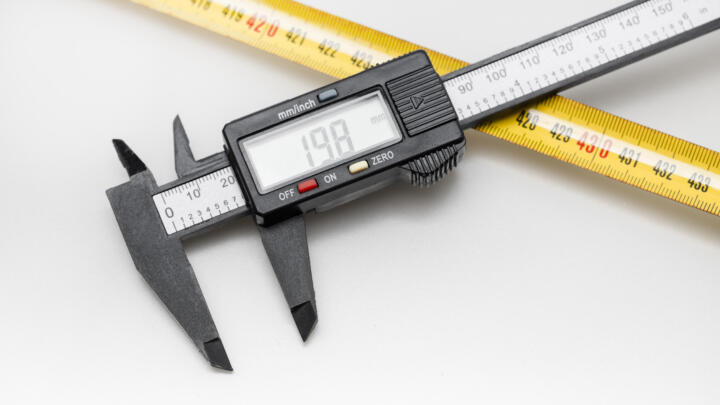
Permit us to ask a petty question: A linear scale shows only full millimeters, so how can 12.3 millimeters (0.48 inches) be measured with it? Portuguese mathematician and astronomer Pedro Nunes investigated this issue as far back as around 1542 and came up with a method for determining intermediate values on a scale with greater accuracy. In 1631, Pierre Vernier complemented the graduation by a second, finer scale enabling even fractions of a millimeter to be read. Calipers are still using it.
Reason for relevance? The Vernier scale enables greater accuracy of reading dimensions than the main scale alone would. In the case of calipers, for example, that’s useful for checking diameters, wall thicknesses, or gaps – in fast and varied ways, and directly on the workpiece.
Conventional plow/seed drill | 1701
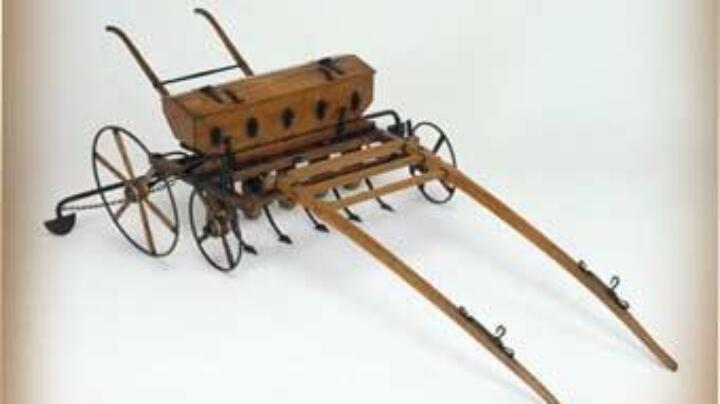
Modern agriculture is based not (only) on folk sayings but on thoroughness and efficiency. For a long time, that did not apply to sowing because farmers would spread the seeds by hand. Around 1701, English agriculturist Jethro Tull – yes, the band named itself after him – invented a seed drill enabling seeds for wheat and turnips to be sowed in three rows simultaneously. Tull subsequently wrote that he decided to develop a machine for planting crops more reliably than these hands could. Installed behind the machine was a harrow for covering the seeds. Two things to be mentioned in that context: First, Tull’s contemporaries found his ideas silly and second, the invention was much older because devices for sowing crops in rows were previously known in Asia more than a thousand years earlier.
Reason for relevance? With his invention, Tull revolutionized agricultural practice ensuring higher precision and therefore more efficiency of sowing crops.
Tuning fork | 1711
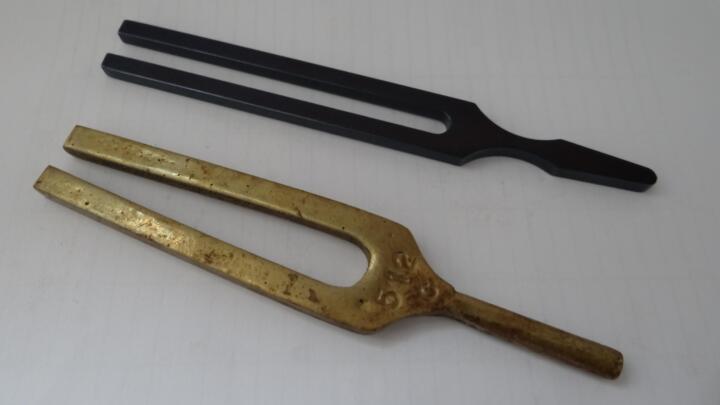
Once struck, a tuning fork will vibrate with near-uniform frequency. Its invention is attributed to John Shore, a trumpeter to the English royal court, who developed it in 1711 to tune his instruments more reliably. Up until then, pitch pipes and other tools served as a reference. They were made of wood, though, a material that reacts to temperature and humidity, whereas Shore’s fork was made of metal and thus much more precise. Today, the international ISO 16 standard has set the concert pitch a¹ to 440 hertz – i.e., 440 oscillations per second.
Reason for relevance? In the 19th century, the tuning fork became a scientific instrument: Tuning assisted in systematically investigating the physical properties of sounds.
Marine chronometer | 1759
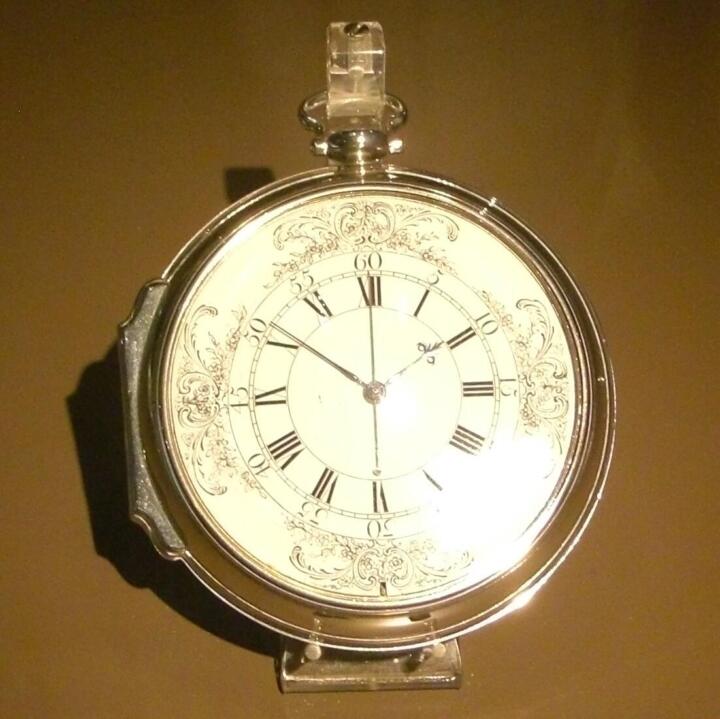
20,000 pounds as prize money: That’s how much the British parliament in 1714 promised to the individual that solved the problem of the degree of longitude at sea. Latitude could already be determined with pretty good precision. To do so, sailors would measure the altitude of the Sun or certain stars. By contrast, for longitude, navigators needed the local time on board and the time at a location with a known degree of longitude – and the timepieces on board were anything but accurate. English joiner and clockmaker John Harrison created a particularly precise clock. Harrison said that for each degree of longitude sailed westward noon would be four minutes later than where we are. His H4 completed in 1759 resembled a large pocket watch and kept the reference time even at sea. The drive mechanism he invented is occasionally still being used in mechanical chronometers today.
Reason for relevance? The marine chronometer made seafaring safer: Precision positioning helped avoid hazardous navigational decisions.
Micrometer | 1805 / 1848
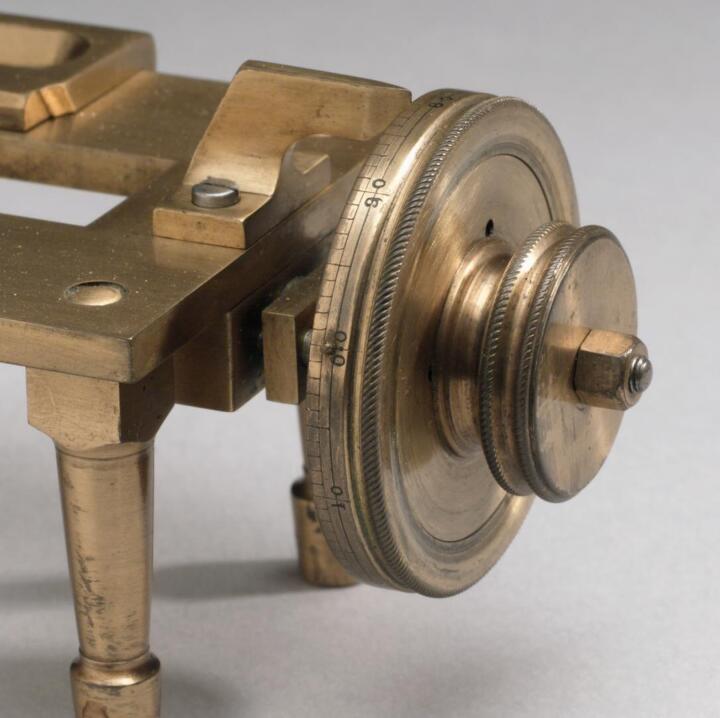
For starters, the term micrometer refers to two different things: a unit of measurement and a device used for measurements. The unit of measurement equates to a thousandth of a millimeter. The measuring device determines minute gaps by using a screw that brings two measuring areas close to one another. English mechanical engineer Henry Maudslay made an important move in the development. In 1805, he built a large table-top measuring device with a carefully crafted screw dubbed “Lord Chancellor” because it had the final say in controversial measurement issues. In 1848, French instrument maker Jean-Laurent Palmer built a handier version, a precursor to today’s micrometer.
Reason for relevance? Where particularly minor dimensional variations matter precision screw mechanics enable even more accurate measurements. Micrometers, for instance, check the diameter of a shaft or thickness of sheet metal. In that way, even minimal variations can be detected which can determine whether a component complies with the required tolerances.
“When you can measure what you are speaking about, and express it in numbers, you know something about it.”
William Thomson (Lord Kelvin), “Electrical Units of Measurement,” 1883
Standard meter | 1875/1889
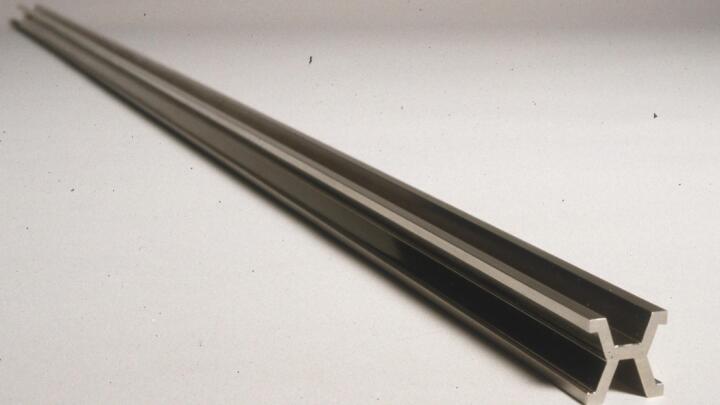
Is a meter in Herzogenaurach exactly as long as one in New York? Yes – but the idea behind it is older than the international standard. After the French revolution, a standard dimensional system was supposed to replace the many regional dimensions. The meter was meant to be a universal, science-based unit of measurement: In 1791, the French National Assembly decided to define it as the ten-millionth part of the route from the equator to the north pole along the meridian in Paris. To calculate that route, astronomers Jean-Baptiste Delambre und Pierre Méchain from 1792 on measured a meridian arc between Dunkirk and Barcelona. In 1875, 17 nations with the meter convention agreed on an international standard. In 1889, the meter received a tangible reference: a bar with a 90-percent platinum and 10 percent iridium content whose gaps between two graduations served as the standard meter. To this day, it is preserved by the International Committee for Weights and Measures (BIPM) in Sèvres near Paris. Since 1960 the meter was initially defined by the wavelength of a certain radiation of the noble gas krypton and since 1983 by the speed of light in a vacuum.
Reason for relevance? Precision requires common standards. Before international standardization, different units of length were used in many places. This made it difficult to compare scientific measurements and to collaborate across national borders.
Carat | 1907
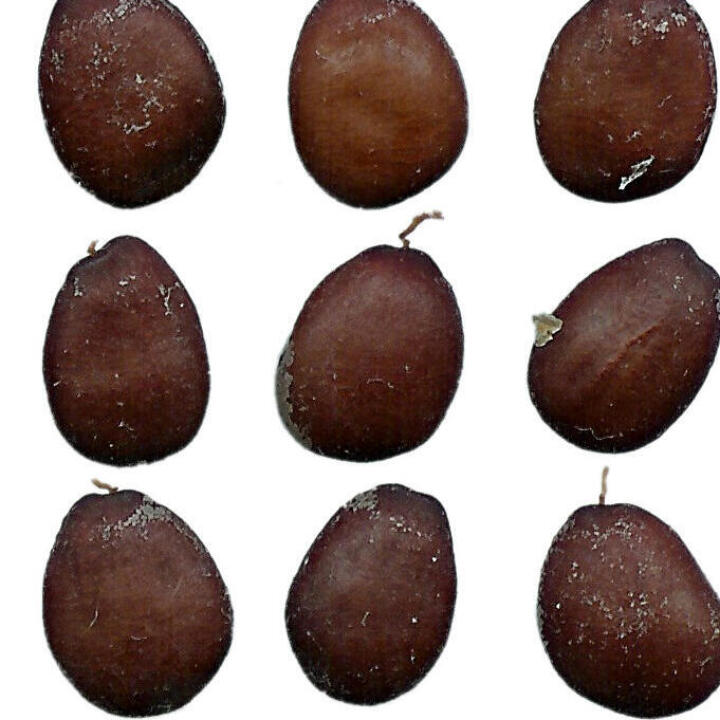
Long before gemstones were measured in milligrams the seeds of the carob served as the measure of things, or more precisely, as small weights on the scale. The ancient Greeks called the seed kerátion, from which the word carat was derived. The catch, though, was the fact that various weights evolved from it. How much a carat weighed depended on where the gemstone was traded. In 1907, the chaos came to an end when the General Conference on Weights and Measures recommended to set the metric carat at 200 milligrams (0.007 ouncers). Hence five carats now correspond to one gram (0.03 ounces).
Reason for relevance? The standardization created a reliable basis for precise evaluations and fair international trade.
Scoville scale | 1912

It burns like fire on the tongue but how hot is it really? To find out, American pharmacist Wilbur Scoville devised a test in 1912: He diluted chili extract until the test persons no longer perceived any pungency and the stronger the required dilution the higher the value on the Scoville scale subsequently named after him. Today, analytical equipment performs the measurements. Using high-performance liquid chromatography, they determine the concentration of the responsible capsaicinoids from which the Scoville value can be calculated.
Reason for relevance? The original method was based on human perception and therefore subjective. Modern chemical analyses enable reproducible and more precise results without test persons having to try pungent extracts.
Electron microscope | 1933
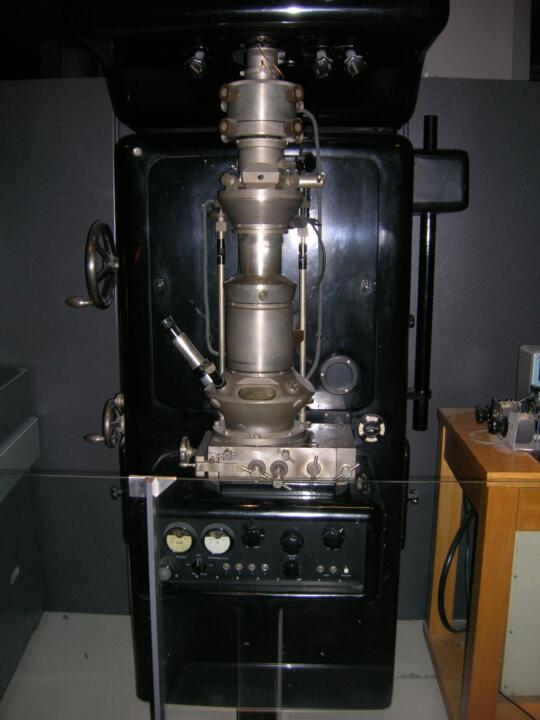
The maximum enlargement of a light microscope that makes sense is about one thousandfold. That’s it. Viruses cannot be seen that way but that exactly was the objective of electrical engineer Ernst Ruska and the reason why he was looking for an alternative and working with electrons. Their wavelength is much shorter than that of visible light. In 1933, Ruska presented an electron microscope prototype with a resolution surpassing that of a light microscope ten times – and in 1938 he managed to make viruses visible. In 1986, the German was awarded the Nobel Prize in physics and said, “If you can see something it’s much easier to grasp it.”
Reason for relevance? The electron microscope shifted the limits of what is visible. It enabled investigations of the most delicate structures of cells and pathogens and opened new opportunities to biology, medicine, and material research. A milestone for precision: Instead of only providing larger images, science was now able to detect details that used to be hidden.
LEGO | 1963

Even playing requires precision. Since 1958, the studs and anti-studs’ principle has been providing the clutch power of the LEGO bricks. In 1963, the company started using sturdier ASB plastics. According to the company’s history, the material at that time enabled injection molding with an accuracy of 1/200 millimeters, i.e., 0.005 millimeters (0.00019 inches) – because for maximum fun, the parts simply need to fit together with perfect precision.
Reason for relevance? Switching to ASB was more than a choice of material: LEGO concurrently enhanced injection molding machines, tools, and manufacturing processes. The company made controlled manufacturing a central element of its quality strategy.
Atomic second | 1967
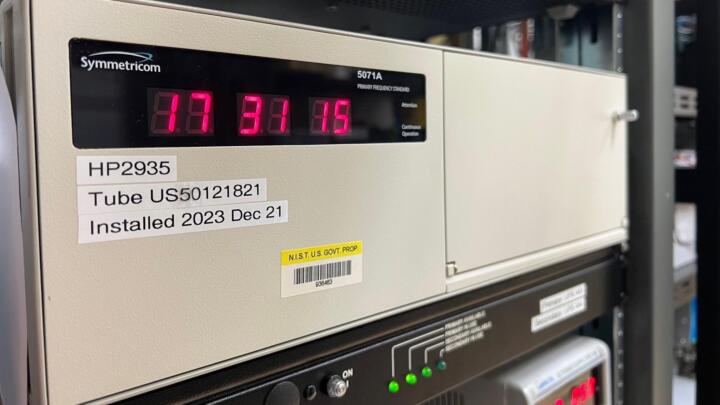
How long is a second – precisely down to a fraction? For centuries, time was derived from the motion of the Earth but as we’ve learned (by now) our planet doesn’t rotate with complete uniformity. Consequently, to keep enhancing the precision of clocks, a more stable clock had to be found. Researchers found it in the cesium 133 atom: Under certain conditions it alternates between two energy states generating radiation with an extremely constant frequency. Since 1967, it has been serving to define a second: one second is made up of exactly 9,192,631,770 oscillations of this radiation.
Reason for relevance? The atomic second made the measurement of time independent from the fluctuations of the Earth’s rotation. Since 1972 time experts have been adjusting the worldwide basis for time measurement by the atomic clock to the Earth’s rotation every few years by inserting a leap second similar to the principle of a leap year.
However, computers, telecommunications networks, and technical systems depend on precise, uniform time measurement. Even the minutest variations can interfere with their processes. Satellite navigation could benefit from more precise clocks because the runtime of radio signals can serve to calculate the distance to a satellite, with a variation of one billionth of a second equating to about 30 centimeters (12 inches). Even more precise time measurements could further enhance position sensing.
However, the additional time leap with the leap second can confuse computer systems and processing of time-critical data. That’s why this year the General Conference for Dimensions and Weights decided to end this practice. Starting on May 20, 2027, the coordinated world time is supposed to continue running without further leap seconds.
Barcode | 1974
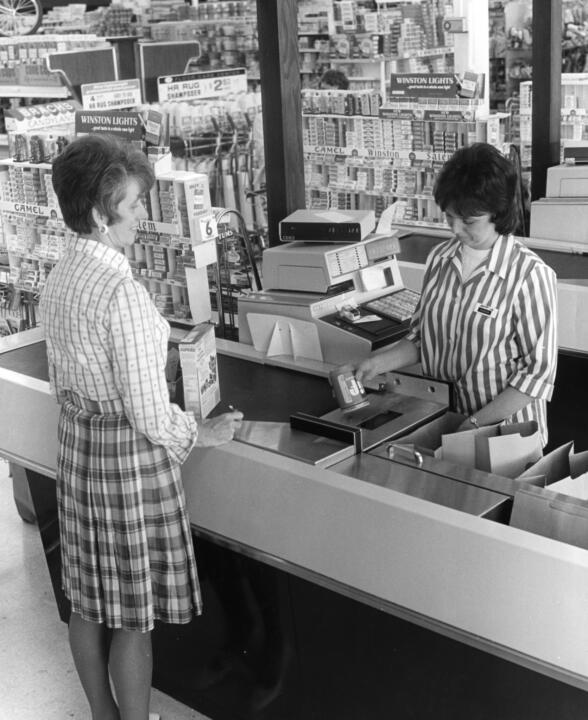
On June 26, 1974, cashier Sharon Buchanan pushed a pack of Wrigley’s Juicy Fruit across a scanner at a Marsh supermarket in Troy, Ohio. It was the first product whose barcode was scanned at a checkout counter. The code translates a product number into black bars and white spaces in between, a laser scans the pattern, a computer recognizes the code and allocates the stored product data to it. Doesn’t sound particularly spectacular but the invention was a game changer in worldwide retail. By the way, the man that came up with that principle was Norman Joseph Woodland who in 1949 was thinking about the Morse code at Miami Beach and running his fingers through the sand in the process.
Reason for relevance? The barcode made products machine-readabe and accelerated checkout processes. But above all, it enabled capturing the movement of merchandise automatically and with high accuracy. As a result, it became a key component of retail digitalization – and an example of how precision in detail can change global processes.
Quantum dots | Today

What crystals have to do with very good color TVs? Quite a bit: In the 1980s, researchers discovered the fact that the color of semi-conductor crystals depends on their size. These so-called quantum dots are only the size of a few billionths of a meter and regarded as a milestone of nanotechnology. In 1993, Tunisian-American chemist Moungi Bawendi developed a method for producing quantum dots with high uniformity and in defined sizes. In 2023, Bawendi, Louis Brus, and Alexei Jekimow were awarded the Nobel Prize in chemistry in that area. So, and to create a connecting link to television, by now, quantum dots are being used in TV screens, among other things. In a podcast, Bawendi illustrated the point by saying “You see the quantum mechanics forming in front of your eyes.”
Reason for relevance? Quantum dots show how crucial precision is in the nanometer range: They help researchers make individual molecules and cell processes visible. A concrete example: In 2015, researchers described how quantum dots enabled them to track the behavior of receptor proteins on living cells. As a result, it was possible to investigate how cells take up and transmit signals.
Precise misunderstanding
Yes, it does happen that despite meticulous units of measurements things go awry: Space probe Mars Climate Orbiter had been traveling for nine months when it reached Mars on September 23, 1999 and was supposed to enter its orbit. Yet a serious error had slipped into the project: Manufacturer Lockheed Martin supplied certain data in American units while NASA’s navigation software was expecting to receive metric values, i.e., the data about the effect of the control jets were transmitted in pound-force seconds instead of Newton seconds. The software miscalculated the orbit; the probe came too close to Mars and was lost.


