Always good air during operations
In the operating room, every move must be precise. Once the incision has been made, the tissue is carefully separated, treated, or removed. After the procedure, the wound is professionally sutured, a daily act of precision that doctors perform under the strictest hygienic conditions. This is ensured not only by sterile protective clothing and instruments, but also by the air handling units in the operating room.
What happens if the air handling unit in the operating room fails?
At a renowned English hospital, the air handling units operate around the clock, seven days a week. The fans regulate air circulation and temperature, specifically reducing germs, dust, and harmful particles in the air. If there is insufficient ventilation or the temperature is not optimal, the concentration of germs increases, which significantly increases the risk of postoperative infections.
„The fans run continuously at 2,500 speeds per minute. They ensure clean air at all times and keep bacteria out of our operating rooms. An unexpected failure of the fan system leads to unwanted interruptions in medical operations. Surgical procedures have to be postponed or canceled, or emergency measures become necessary to maintain hygiene until the ventilation system is repaired. That is why we are looking for a monitoring solution that allows us to continuously check the bearings in the ventilation systems. However, conventional mobile data collection is not practical because the bearings are difficult to access in closed housings,“ explains the hospital’s maintenance manager.
The hospital opted for the OPTIME condition monitoring solution from Schaeffler
To avoid unplanned downtime of its air handling units, a renowned English hospital opted for the OPTIME condition monitoring solution. It combines condition and lubrication monitoring and enables maintenance staff to monitor all machine data centrally in one app. This ensures that the sterile environment in the operating room is maintained.
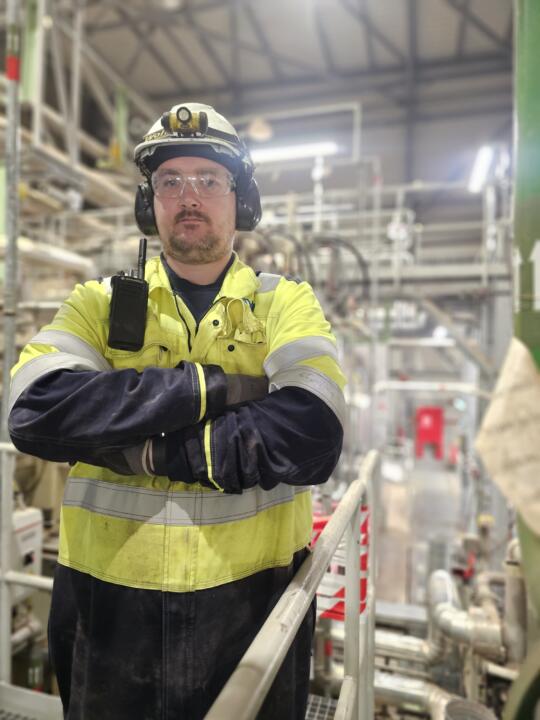
The certified Schaeffler Service Partner for Condition Monitoring, Rewinds & J. Windsor & Sons (abbreviated as RJW), took care of installing the OPTIME sensors and was also asked to handle the OPTIME Expert Services going forward. In this specific case, that meant remote diagnosis and on-site mechanical support.
RJW ENGINEERING LIMITED
"When our customer is satisfied with the OPTIME condition monitoring solution and our service, so are we. The customer has confirmed this to us several times."
In the first year alone, the solution prevented impending bearing damage in one of the fans. Thanks to the OPTIME app, maintenance personnel were able to keep a constant eye on the condition of the fans. Early detection prevented an unplanned failure of the fan system and high follow-up costs.
How was the solution implemented at the customer‘s site?
RJW installed two OPTIME sensors on each fan, monitoring both the drive side and the non-drive side independently. After around 12 months in operation, the OPTIME app showed an increase in acceleration values at the drive bearing on one of the fans (see Figure 1). Immediately after the increase in values, a planned shutdown was scheduled with the hospital for a weekend. When the fan bearing was removed, the suspicion that the bearing needed to be replaced was confirmed. The
RJW maintenance team had, as a precaution, brought a replacement bearing.
After the corrective maintenance measure was carried out, no further increase in the characteristic values was recorded.
How the OPTIME Ecosystem from Motion Technology Company Schaeffler works

OPTIME CM is part of the OPTIME Ecosystem. This combines condition monitoring and lubrication in one app and offers additional functions. After installing the gateways, wireless OPTIME sensors, and/or lubricators, all that remains is to scan the sensors and lubricators using the Schaeffler OPTIME app, a process that takes just a few moments. The data analyses are based on physical models developed by Schaeffler, machine learning models, and decades of practical knowledge gained from condition monitoring of rolling bearings. Through a glance at the smartphone or dashboard, maintenance staff can quickly identify which machines require attention, indicated by color-coding. The system also identifies probable causes of issues, such as bearing damage, misalignment, or imbalance.
You can find more information about the OPTIME ecosystem here.


