Tomorrow begins today
1. Smart Engineering
How will engineers have to work in the future?
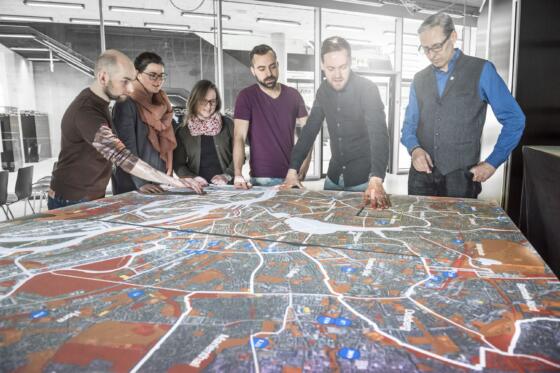
To expand Schaeffler’s strong market position, the company needs to keep pace with the continually accelerating development cycles of the automotive industry. And not only that: The new markets around robotics and automation call for an engineering and design process with maximum efficiency and integration. Schaeffler’s outstanding core competencies in engineering (system understanding, materials know-how, manufacturing expertise) in the “Smart Engineering” sub-cluster are optimized in concert with IT by digital process steps and complemented by AI implementations. Especially the motion technology company’s product portfolio, which is highly diversified due to its four divisions and the digital engineering work environments that requires, call for adapted methodologies.
New methods in requirements engineering massively accelerate the response times in working together with customers and demonstrate that the customers’ trust in Schaeffler is well-earned and that speed and quality are not mutually exclusive. Especially in a competitive environment with Chinese competitors, that’s an important strategic advantage.
What does the engineering workplace of the future look like?
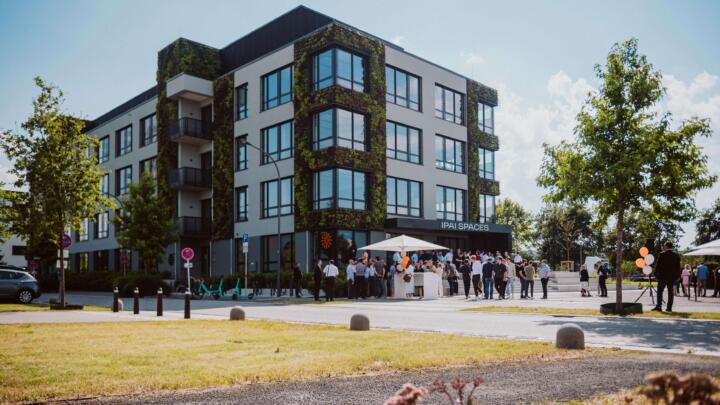
Schaeffler is pursuing answers to that question together with the Innovation Park Artificial Intelligence (IPAI) in Heilbronn. As a new member of this developing AI hub, Schaeffler is strengthening its expertise relating to digitalization. Schaeffler is going to use this platform to drive specific use cases for artificial intelligence in engineering. The objective is to use simulation data more efficiently, automate design processes, and integrate AI-supported functions directly into products. The Heilbronn location serves as a real-world laboratory and networking platform for setting standards for industrial AI uses together with other tech actors.
Further information about the Innovation Park Artificial Intelligence at: www.ip.ai
Technology field: Quantum computing
A core task of the “Digital Solutions” innovation cluster is an early and independent look at new technologies such as quantum computing. By means of initial use cases in the areas of simulation and material science Schaeffler strategically establishes quantum computing under two premises: “quantum-inspired methods” and “quantum-based methods.” Both are assessed as important trailblazers especially in smart engineering as well.
2. Smart Products
Software-based and AI-based product development and lifecycle analysis
The datasets generated by a digital product development process can be used not only for simulations and configurations but also for selecting and virtually testing new materials or production scenarios. In addition to the digital simulations, data collected in the field are used to create digital product twins providing conclusive information about the condition of the total system (e.g., a vehicle or a robot) thus resulting in a smart product.
The innovation cluster also makes strategic assessments for the virtualization of components such as sensors to establish an architecture with maximum efficiency for complex mechatronic products in the long run.
Input from external sources
Especially with regard to driving digital innovations, it’s very important to look toward the outside world and to engage in systematic networking activities in the right eco-systems. This is another area in which the “Company on Campus” model SHARE, in which Schaeffler works together with five leading universities around the globe, provides important impetus. In the area of digitalization, the focus in SHARE at FAU (Erlangen-Nuremberg) is on the fields of artificial intelligence and quantum computing while the collaboration with NTU in Singapore specializes in robotics solutions. This digital eco-system is complemented by SHARE at KIT (Karlsruhe) that drives central developments for mobility of the future.
“At Schaeffler Vehicle Lifetime Solutions (VLS), we evaluate an AI-supported partially automated process for handling guarantee and warranty cases. By means of modern algorithms submitted data and image materials are analyzed to quickly and reliably identify causes of defects and to efficiently process routine inquiries. In that way, we noticeably shorten processing times, ease the burden on our teams, and enhance customer satisfaction. With that, Schaeffler VLS sets new standards in the quality and service process.”
Dr. Jürgen Bohn, Digital Solutions Expert
3. Digital Services
Adding value for customers
At Schaeffler, the strategic utilization of high-quality, structured data goes beyond simple data acquisition. Schaeffler treats data not only as a valuable resource for improving production and products but specifically also for tapping digital potential for the benefit of its customers. For instance, to coordinate product requirements with customer requirements even more precisely and quickly or to offer additional smart applications for machine monitoring and maintenance in the established OPTIME eco-system. Clearly, the development of new product-based and software-based services is increasingly becoming the focus, both in the B2B segment and for consumers, especially in the automotive sector.
5 questions for …

Theresa Schreyer. As the lead cluster manager, the digitalization and innovation strategist attends to integration solutions in the research and development function.
What are the half-life periods of digitalization strategies in view of the enormous pace of technical progress?
For Schaeffler, digital strategies and technological target images are important north stars for implementation but also for communication with employees. We permanently observe and evaluate the developments in the ICT sector (information and communications technologies, editor’s note) by means of what we call technology radars and internal expert networks. That makes it possible for us to dynamically adapt our digitalization vision. Decisive in that regard is to align digitalization with qualitative and value-creating optimizations that remain valid even when technological elements change.
Aside from AI, what software and hardware trends is Schaeffler shifting into focus?
Artificial intelligence is in fact an important, albeit not the only element of digitalization technologies used by Schaeffler. Digital twins and fully virtualized versions of production lines in the metaverse are two other key technologies. They make it possible to ensure high validity about a product’s behavior or the manufacturing processes depending on changing parameters. That means we can see how environmental factors impact on production and the product per se without letting them occur in the real world. Another new technology is that of quantum computing that’s currently being used primarily in material science and logistics.
How do you measure the success of your digitalization strategy?
The quality claim of our digitalization measures is particularly shaped by how we can accelerate the pace, for instance in product development processes targeting ways in which we can deliver customized configurations of the desired components to our customers as fast as possible. The reduction of processing times or enhanced efficiency in customer projects are two particularly good measures of the success of our digitalization strategy – all that of course by ensuring consistently high Schaeffler quality.
How is digital transformation integrated into existing business processes without interfering with operations?
Initial new digital solutions are mostly tested by small teams consisting of colleagues in our innovation clusters and representatives of the business units or divisions. In addition, our good collaboration with startup companies is an enormous advantage in terms of including an external view of optimizations and driving them with the requisite speed. The next step in developing new digital processes typically takes place simultaneously with the developments of proven processes – as a second pathway so to speak. If that pathway proves to be faster, more consistent, and more efficient the solution is passed on to the operating units and made available globally so that all relevant units can benefit from it.
How can employees be trained and motivated for digital transformation?
Progress with digital technology often offers the opportunity to reduce IT complexity. Especially artificial intelligence proves that daily. Offering employees the opportunity to reliably work together with these technologies in everyday settings reveals high levels of inventive curiosity after small initial trials. “How can I simplify my routine work?” That’s the basic question. Employees start assuming responsibility for optimizing their own ways of working and become increasingly inventive. With their high professional expertise, that can soon lead to practical digital solutions. Those additionally seeking to expand their own portfolio of skills and expertise can select appropriate training opportunities in the Schaeffler Academy or the Fit4Digital program.